Clean Energy Career Pathways Catalog
Over 300 job descriptions for technical and specialty jobs in clean energy
Created for job-seekers, hiring managers, the existing workforce, and the public, ACP’s Clean Energy Career Pathways Catalog presents over 300 job descriptions for technical and specialty jobs within the clean energy industry.

This catalog shows the upward mobility and opportunities that exist within the industry, alongside highlighting the skills and requirements necessary to work in these positions. The aim is to provide a better understanding of how existing transferrable skills could be applied to clean energy jobs or what a career progression within the workforce could look like.
This massive effort is meant to provide workers in other energy industries, veterans, and workers in underrepresented communities a better idea of the jobs available in clean energy, as well as support the industry with recruiting and retention.
If you have questions about the catalog, please email [email protected].
Micro Credentials
Measuring the skills needed for effective work as a clean energy technician
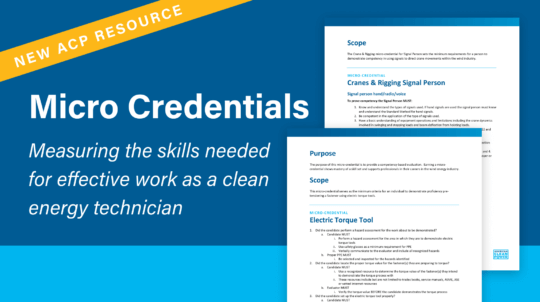
Micro Credentials represent concise, logical skills that – when combined – form the larger skillsets necessary to successfully work in certain jobs on clean energy sites. An individual can be tested against these skills to demonstrate mastery of the skill and, in so doing, get on a path to a promotion.
How can I use Micro Credentials?
Employers can use the Micro Credentials to test and track training effectiveness, technician progression, and fit for various tasks and projects. This can help ensure work is performed safely and competently. The addition of more and targeted Micro Credentials can also be used to reward additional capabilities and skillsets.
Technicians can use the Micro Credentials to demonstrate their competence in particular skills. Using these credentials as reference, the capabilities and the breadth of technician skills can be measured and quantified, which can support career progression.
The ACP Micro Credentials are designed to aid the employer to comply with 29 CFR 1910.269(a)(2)(viii) and 29 CFR 1910.9 (b). These two standards require both training and demonstrated proficiency in the work practices they are expected to perform.
ACP’s Training and Education Working Group has prepared this series of micro credentials. If you have questions about this ACP program, or recommendations for additional micro credentials, please reach out via [email protected].
Qualified Electrical Worker Programs
Guidelines to help companies build a QEW program
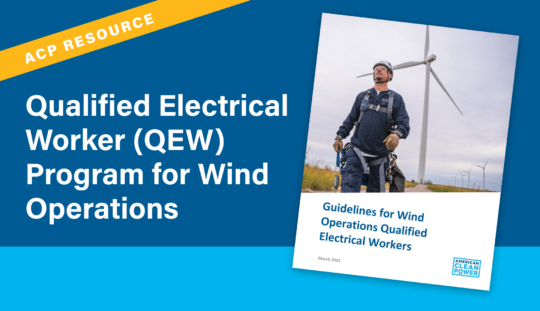
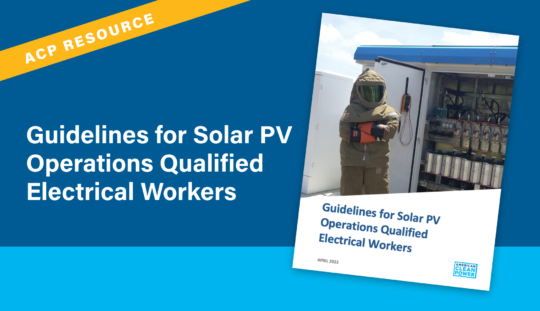
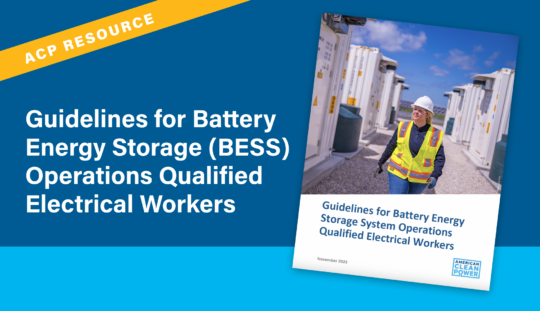
Building, operating, and maintaining any power generation project requires a high level of electrical safety awareness, training, technical skills, knowledge, and the personal discipline to always act in a safe manner. To build such awareness, knowledge and skills requires training, including on specific tasks since each task presents different hazards and mitigation procedures.
The Guidelines Qualified Electrical Workers represent a basic set of criteria for a Qualified Electrical Worker (QEW) program with suggestions for developing the training, managing the verification of skills and the implementation in the field including both the technical skills and the electrical safety elements to be considered. This is intended as a guideline to assist companies in preparing their own QEW program.
If you have questions about the guidelines, please contact [email protected].
Entry-level Technician Training
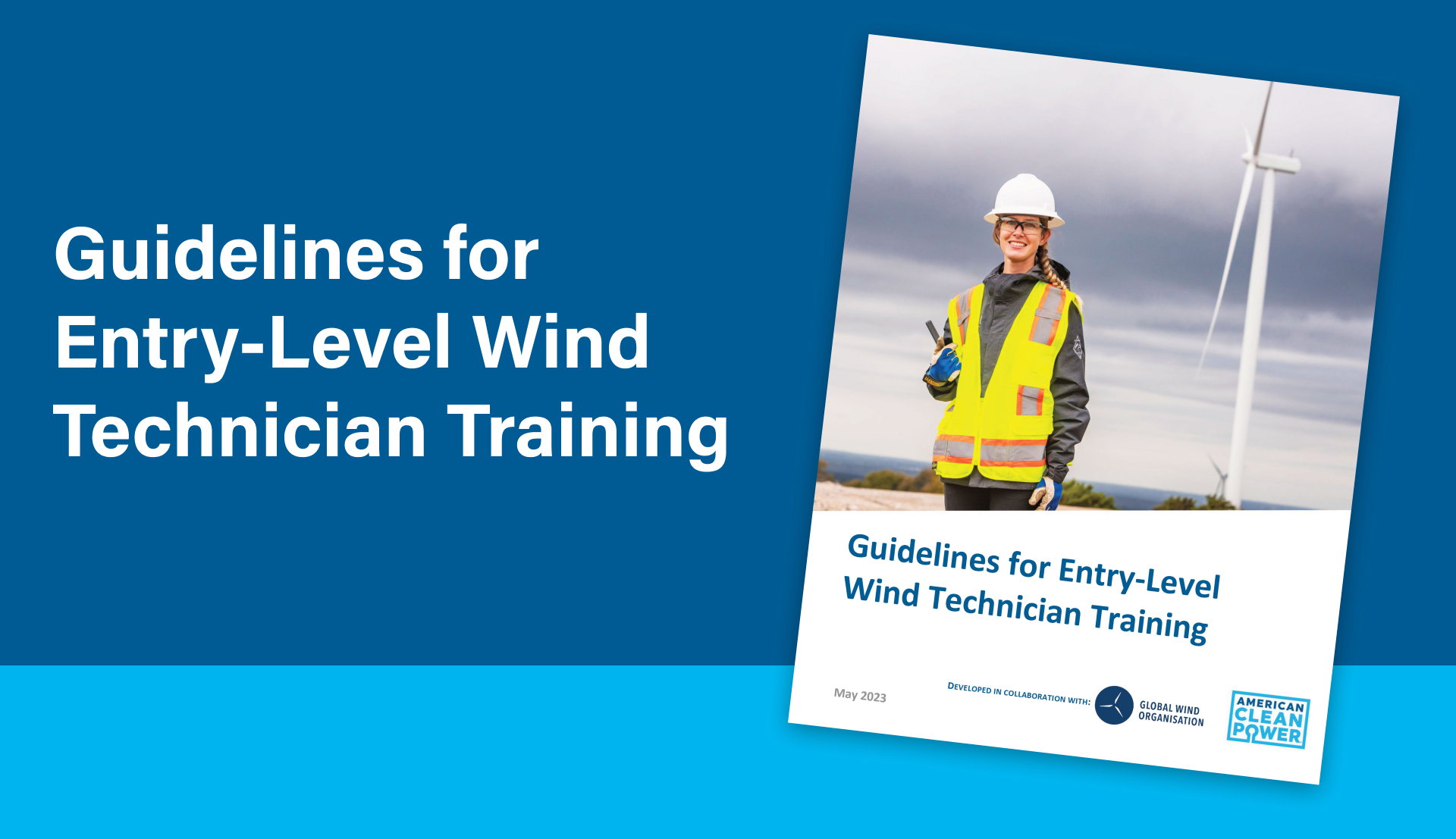
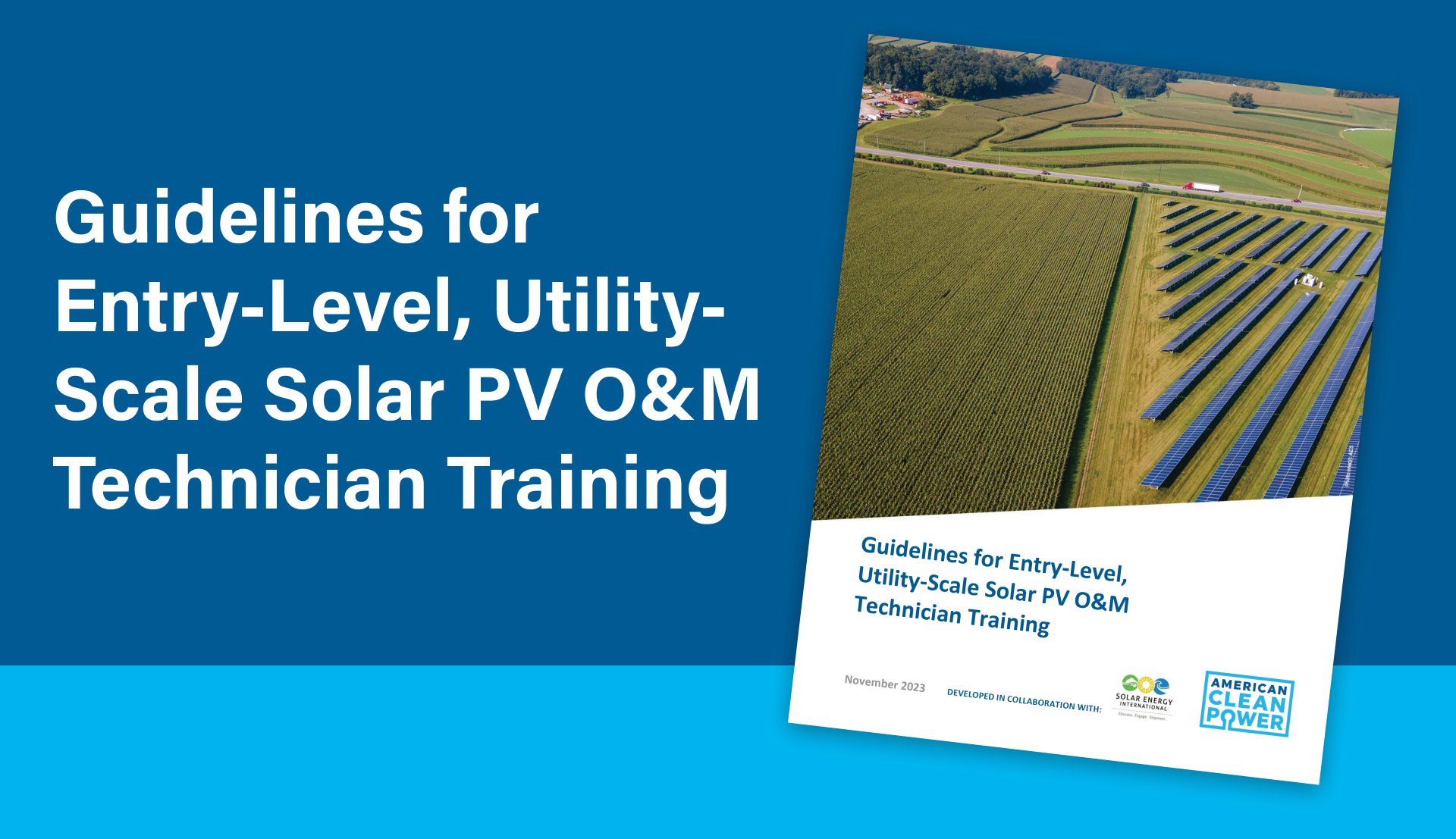
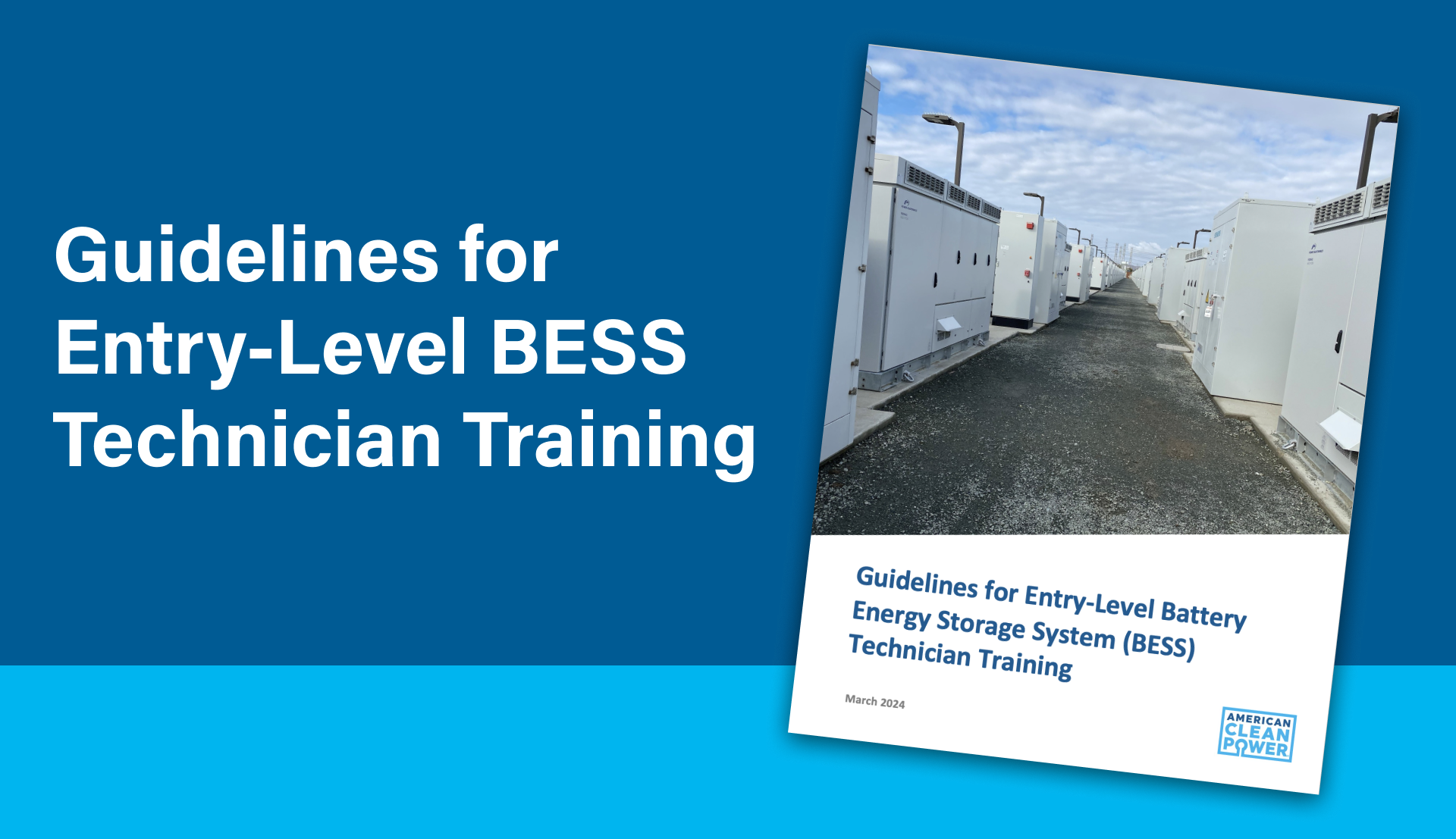
The Entry-level Technician Training Guidelines ensure a comprehensive understanding of entry-level requirements and standardized skills for operations and maintenance technicians working in onshore and offshore wind facilities, utility-scale solar facilities, and battery energy storage system (BESS) facilities
If you have questions about the guidelines, please contact [email protected].
Construction Training
The Construction Training Guidelines ensure a standardized approach to construction training requirements and skills for clean energy sites. Proving guidance for all construction workers, site specific orientation and familiarization to ensure workers are safe.
Download Construction Training Guidelines
If you have questions about the guidelines, please contact [email protected].