American Clean Power
Energy storage facts
Energy storage ensures that the America’s growing energy demands are met responsibly, reliability, and cost-effectively towards strengthen national security.
Statistics
Energy storage represents the next frontier in modernizing the electric grid. By introducing flexibility into how electricity is generated, stored, and delivered, storage transforms a one-way delivery system into a dynamic, adaptive network of technologies. This not only improves grid efficiency and stability but also creates new opportunities to integrate new energy systems into the U.S. power grid, support critical infrastructure, and accelerate industrial innovation.
45 GW
84%
98 GW
The Clean Energy Future Looks Bright
Battery storage for renewable energy will open new doors and allow for clean energy to become even more reliable, accessible and readily available.
Open video in lightboxEnhancing reliability, reducing costs, and increasing grid resilience.
Energy storage is the cornerstone of America’s clean energy future. By capturing electricity when it is abundant and delivering it when it is needed the most, storage increases the reliability and resilience of the grid, optimizes costs to consumers, and helps integrate new and traditional electricity resources. It provides critical flexibility for balancing energy supply and demand and strengthens energy security by leveraging home grown energy sources. Energy storage also enables large-scale electrification by powering homes, businesses, vehicles and industries while helping states and local communities meet their energy goals.
Strengthening Grid Reliability

Energy storage ensures electricity is delivered consistently, supporting stable operations for consumers, businesses, and critical infrastructure.
More Flexible, Adaptive Grid

Storage provides the electricity grid with agility by balancing supply and demand in real time and maintaining power quality during rapid shifts in load.
Optimizing Costs to Consumers

• Storage can offset costs by storing energy when prices are low and discharging it during peak periods when rates are higher.
Safeguarding Business Operations

• Energy storage systems help support behind-the-meter resilience, allowing to businesses ride through short-duration outages without halting operations.
Keeping Communities Powered

Energy storage helps residential and community customers avoid extended blackouts, enabling critical grid services like black start and emergency backup power during extreme weather events in disaster prone region.
Optimizing Renewable Resources

Energy storage makes renewable power output dispatchable, ensuring solar and wind can provide energy around the clock.
Enabling New Industries

Energy storage supports high-fidelity facilities by ensuring steady, reliable power quality, helping critical infrastructure like data centers and advanced manufacturing to operate without interruption.
Balancing Intermittent Resources

By smoothing variable energy output by renewables like solar and wind, storage strengthens grid stability and ensures reliable integration of new energy projects.
Maximizing Land Infrastructure Use

Energy Storage delivers high power density in a compact footprint, reducing land needs compared to traditional generation resources.
Supporting Grid Resilience in Emergencies
Storage enables black start capabilities and rapid recovery after outages, bolstering community resilience in disaster prone regions.
How Energy Storage Works

Mechanical Energy Storage
Stores energy in the form of kinetic or potential energy. It’s later released as electricity by reversing the mechanical process, usually by spinning a turbine.
These projects are usually larger in size and can present longer deployment timelines and more lengthy permitting pathways (relative to electrochemical technologies). As such, they typically have high power capacity and long durations in grid-scale settings.
Key technologies include:
• Pumped Hydro: Moves water uphill during low demand and releases it downhill through turbines
• Flywheels: Spin a rotor to store energy as kinetic motion; discharge by slowing down the rotor
• CAES (Compressed Air Energy Storage): Compresses air into underground caverns and releases it through turbines
Electrochemical Energy Storage
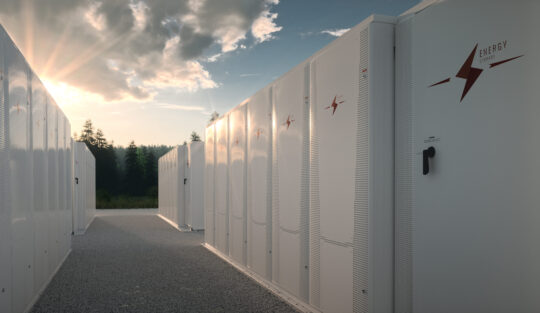
This typically is the most common energy storage technology because of high energy density, fast response times, and scalability. They are modular and costs have rapidly fallen over the past decade for technologies like Li-ion and Na-ion.
Electrochemical cells store energy through chemical reactions that occur between two electrodes (i.e., the cathode and the anode) separated by an electrolyte. During charging, electrical energy forces ions to move and chemical bonds to store energy; during discharging, the reverse happens, releasing that energy as electricity. The flow of ions through the electrolyte and electrons through an external circuit powers feeds into the grid.
Key technologies include:
• Li-ion: High energy density, fast response, and a mature global supply chain. Dominates today’s market for both EVs and grid storage (e.g., LFP and NMC chemistries)
• Flow Batteries: Store energy in external tanks of liquid electrolytes; good for long-duration storage (scalable with the size of the electrolyte tank) and stationary applications
• Na-ion: Emerging alternative to Li-ion; stores and releases energy by shuttling sodium ions between electrodes, leveraging abundant materials with similar form factor and potential cost advantages
Thermal Energy Storage
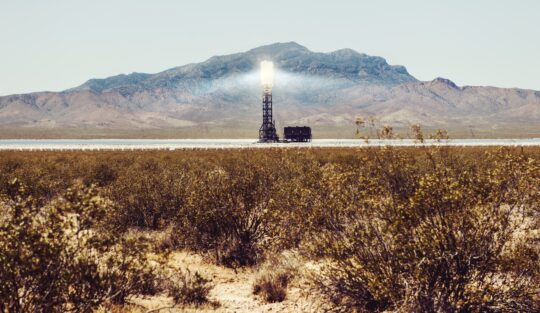
Thermal energy storage is most commonly associated with concentrated solar power (CSP) plants, which use solar energy to heat a working fluid that drives a steam turbine to generate electricity.
In some cases, reservoirs of the heated working fluid can be stored and used by the steam generation system minutes or even hours after solar generation has fallen.
Key technologies include:
• Molten Salt: Stores solar heat in molten salt tanks (NaS); often a large footprint because of siting and permitting requirements
• Ice Storage: Makes ice during off peak ours and melts to cool buildings or infrastructure at a later time.
• Phase Change Materials (PCMs): Absorb and release heat during phase transitions of specialized materials and/or polymers
Energy Storage Facilities
Energy storage facilities are designed to capture, store, and dispatch electricity in a controlled and reliable manner. They are typically characterized by two key metrics:
• Power Capacity: the maximum rate at which energy can be delivered at a single point in time, measured in kilowatts (kW) or megawatts (MW).
• Energy Capacity: the total amount of energy that the facility can discharge over a period of time, measured in kilowatt-hours (kWh) or megawatt-hours (MWh).
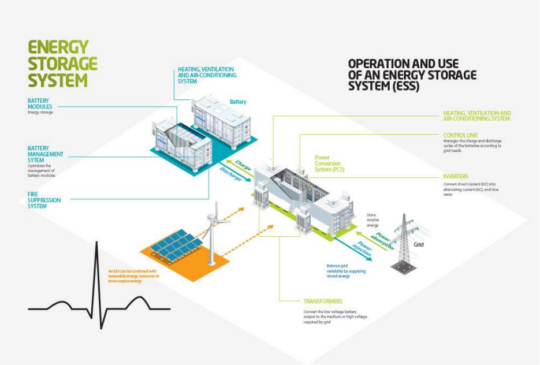
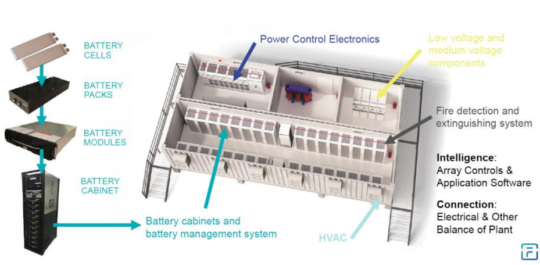
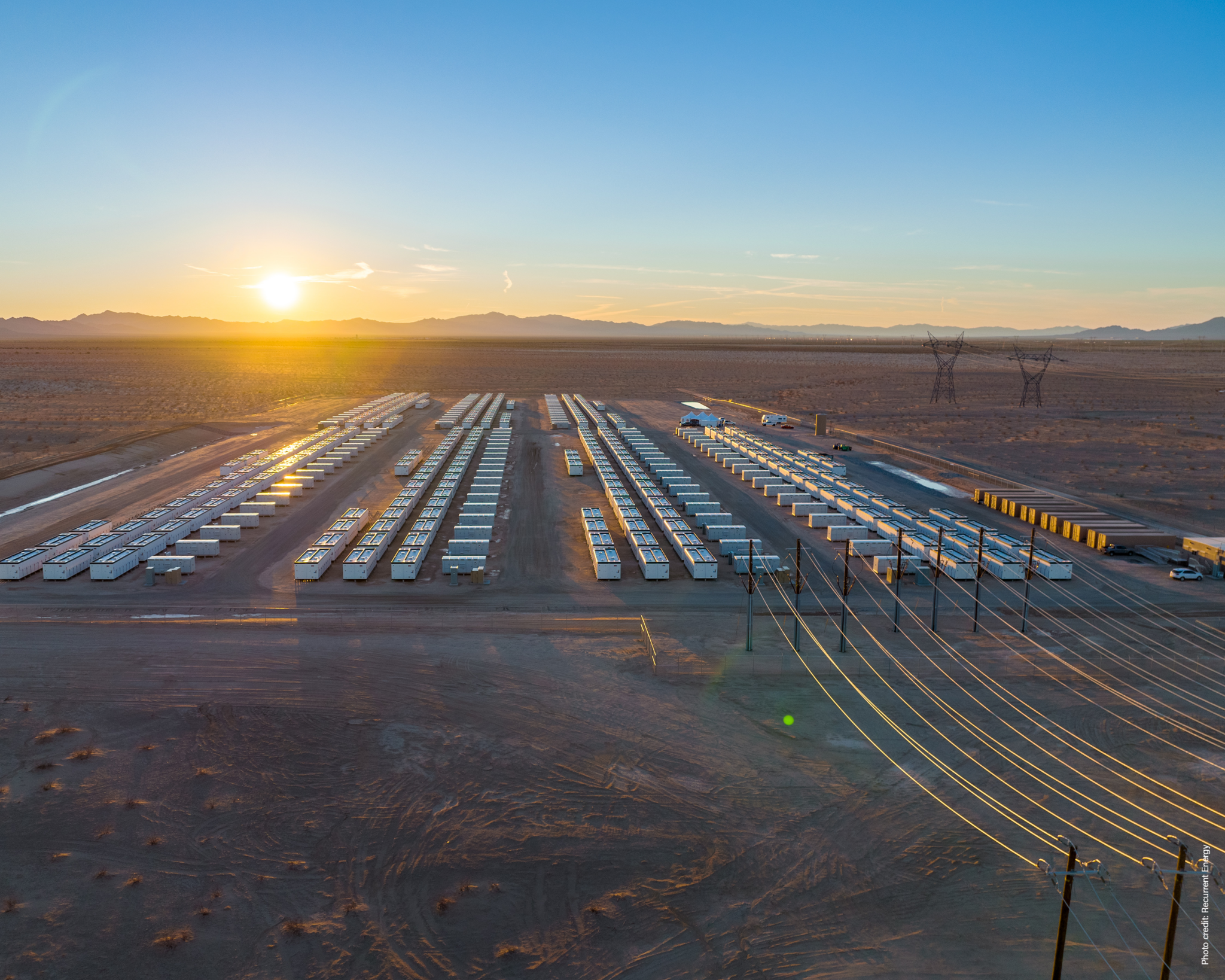
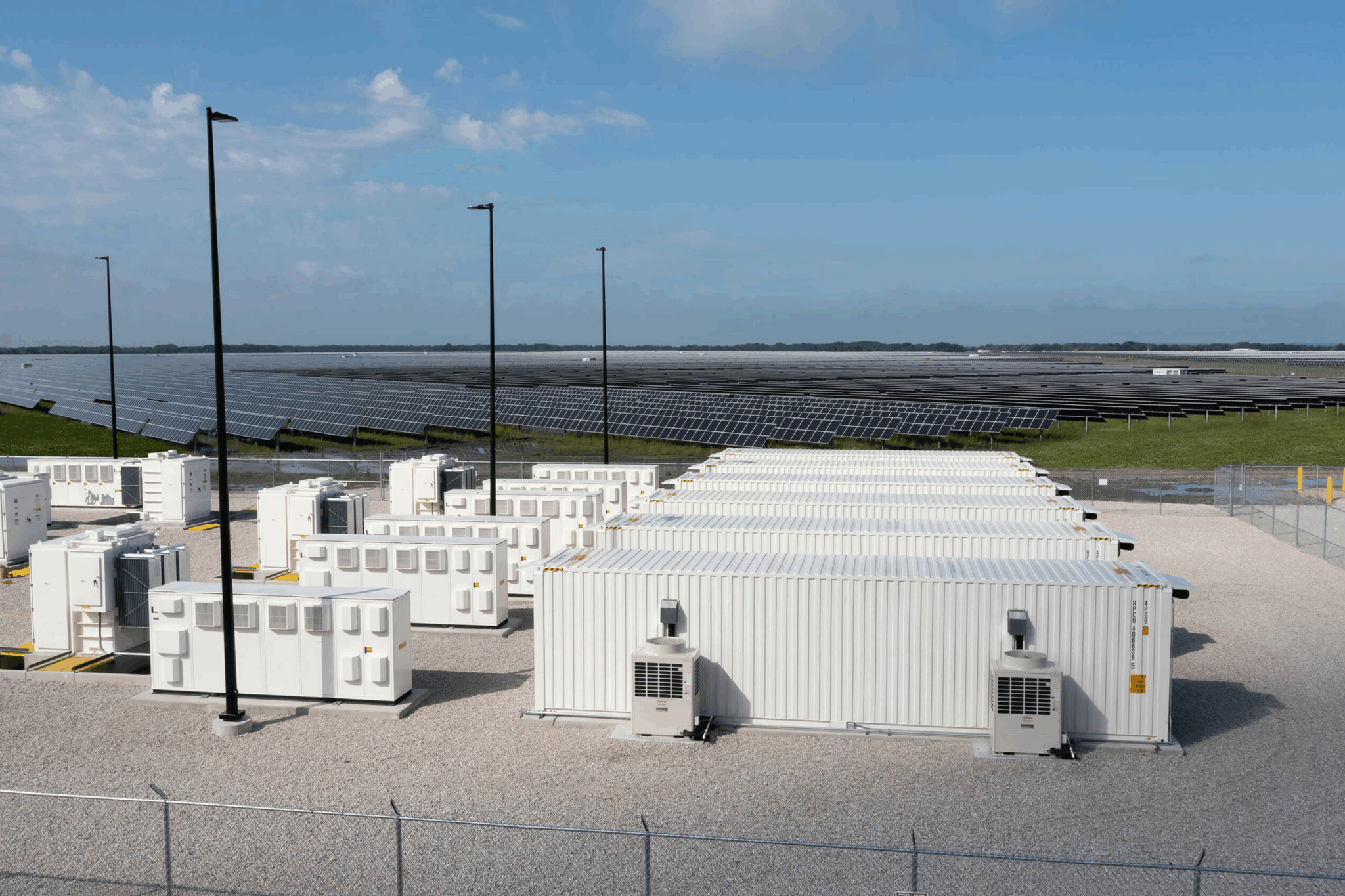
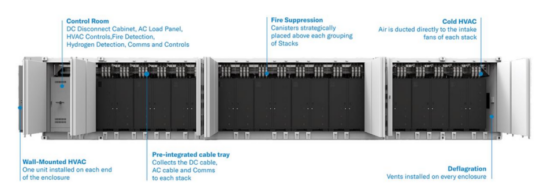
Energy storage facilities pair containerized systems with essential site infrastructure. Inside each container, battery modules are supported by a battery management system (BMS), thermal controls, safety systems, and inverters to convert power for grid use. At the facility level, balance-of-system components like transformers, switchgear, and communications equipment connect the storage system safely and reliably to the electric grid.
Designed for Specific Grid Needs
Energy storage systems are engineered to meet distinct operational requirements, from fractions of a second services that stabilize the grid to multi-hour solutions that shift renewable generation into peak demand periods. There are two main service classes that storage operates in:
• Front-of-the-Meter (FTM): Services that provide power to utility sided operations like frequency regulation, voltage support, renewable integration, and peak demand management. These services also enhance system resilience through black start capabilities and critical backup power during outages.
• Behind-the-Meter (BTM): Empowers end users to cut demand charges, shift consumption to times when power is cheaper or cleaner and seamlessly integrate on-site distributed resources. It also provides reliable backup power, allowing homes, businesses, and essential facilities to maintain operations even during unexpected grid disruptions.
Answers to top energy storage questions
Applications of energy storage
Is energy storage necessary to integrate renewable energy sources like wind and solar?
No, but energy storage is one of several technologies that can make the grid more flexible and allow us to integrate renewable energy resources more effectively. However, studies and real-world experience demonstrate that interconnected power systems can safely and reliably integrate high levels of renewable energy without new energy storage resources. States like Iowa and Kansas now generate a significant amount of their electricity using wind and solar, without widespread deployment of storage. In many systems, energy storage may not be the most economic resource to help integrate renewable energy, and other sources of system flexibility can be explored, including transmission expansion, increasing conventional generation flexibility, and changing various operating procedures, among others.
How does energy storage help make renewables like wind and solar more practical and reliable?
Energy storage can allow us to incorporate more wind and solar into the grid by smoothing out the variable generation from these rapidly growing renewable energy sources. As more wind and solar resources are added, storage will become more important for an efficient, reliable, and clean grid.
Importantly, energy storage can help shift clean energy generation to when it is needed most. For example, peak power usage in most of the U.S. occurs on summer afternoons and evenings, just as solar generation is declining. Temperatures can be hottest during these times, and people who work daytime hours get home and begin using electricity to cool their homes, cook, and run appliances. Energy storage allows us to shift renewable energy to the evening peak hours when demand is highest. It provides the potential for the grid to be powered around the clock by renewables, even when the sun is down and wind isn’t blowing.
Combining energy storage with wind and solar—either at project sites or at the grid scale—also helps smooth out variations in how wind and solar energy flow into the electric grid. Both wind and solar energy production fluctuates based on the availability of wind and solar resources; they are inherently intermittent. A passing cloud, for example, can rapidly change a solar plant’s output. Storage can help smooth intermittent resources’ output to the grid by discharging during periods of low production for the source power plant.
Can energy storage work with all fuel sources?
Yes, energy storage systems are technology- and fuel-neutral. Electricity can be generated by any number of technologies, including renewables like wind and solar as well as oil, natural gas, coal, and nuclear power. Since conventional generation is less variable in nature, it tends to benefit less from integrated energy storage, but in some cases, there are benefits to optimize supply and demand, shift generation to peak demand, and provide grid management.
Cost implications of energy storage
How much does it cost to build a solar-plus-storage plant?
The DOE’s Office of Energy Efficiency and Renewable Energy provides useful data to understand the costs of solar-plus-storage and how duration of storage impacts cost. It may seem counterintuitive, but energy storage costs actually decrease with longer duration because the cost of inverters and other hardware account for more of the total system’s costs over a shorter period of time, according to DOE data. A standalone 60-megawatt storage system will decrease in cost per megawatt-hour (MWh) as duration increases. In other words, the longer your storage lasts, the lower the cost per MWh.
How does storage reduce energy costs?
- Supports the integration of more wind and solar generation: Wind and solar are the cheapest sources of electricity. Energy storage supports the integration of higher and higher shares of renewables, enabling the expansion and incorporation of the most cost-effective sources of electricity generation.
- Reduces energy waste: Energy storage can help eliminate energy waste and maximize the benefits of renewable energy. Energy storage is the only grid technology that can both store and discharge energy. By storing energy when there is excess supply of renewable energy compared to demand, energy storage can reduce the need to curtail generation facilities and use that energy later when it is needed.
- Improves grid efficiency: Energy storage is instantly dispatchable to function both as generation and load, so it can help the grid adjust to fluctuations in demand and supply, which optimizes grid efficiency, alleviates transmission congestion, and increases grid flexibility. This reduces overall system costs.
- Limits costly energy imports and increases energy security: Energy storage improves energy security and maximizes the use of affordable electricity produced in the United States.
- Prevents and minimizes power outages: Energy storage can help prevent or reduce the risk of blackouts or brownouts by increasing peak power supply and by serving as backup power for homes, businesses, and communities. Disruptions to power supply can be extremely costly and hazardous to health and safety. Energy storage makes the grid more resilient and reliable.
Energy Storage Basics
What is the relationship between energy storage capacity and duration?
The DOE’s Office of Energy Efficiency and Renewable Energy provides useful data to understand the relationship between megawatts and storage duration. Consider their example using a 240 megawatt-hour (MWh) lithium-ion battery with a maximum capacity of 60 megawatts (MW). A 60 MW system with four hours of storage could work in a number of ways:
You can run the battery at maximum power for four hours
You can run the battery at half power for eight hours
Taking that example another way, you could use that same storage system to produce a lot of power in a short amount of time or less power over a longer period of time. That means a 240 MWh battery could power:
60 MW over 4 hours
30 MW over 8 hours
15 MW over 16 hours
However, depending on a system’s capacity, it may not be able to get 60 MW of power instantly. That is why a storage system is referred to by both the capacity and the storage time (e.g., a 60 MW battery with 4 hours of storage) or—less ideal—by the MWh size (e.g., 240 MWh).
While this example focuses on batteries—since most energy storage being built today is battery-based—the same concept of megawatts to hours of usage applies using any storage system to store and release electricity.
Why do we need batteries to support the electricity grid?
Energy storage fundamentally improves the way we generate, deliver, and consume electricity. Battery energy storage systems can perform, among others, the following functions:
1. Provide the flexibility needed to increase the level of variable solar and wind energy that can be accommodated on the grid.
2. Help provide back-up power during emergencies like blackouts from storms, equipment failures, or accidents.
3. Lower costs by storing energy when the price of electricity is low and discharging that energy back onto the grid during peak demand.
4. Balance power supply and demand instantaneously, which makes the electrical grid more reliable, resilient, efficient, and cleaner than ever before.
How are batteries connected to the electrical grid different from batteries in laptops and mobile devices?
Battery energy storage systems operate by converting electricity from the grid or a power generation source (such as from solar or wind) into stored chemical energy. When the chemical energy is discharged, it is converted back into electrical energy. This is the same process used with phones, laptops, and other electronic devices. However, while batteries in consumer electronics have a single function, those connected to the electrical grid — which are much larger — serve more complex functions. For instance, electrical grid batteries must be combined with power conversion devices to produce AC (alternating current) power. Batteries connected to the electrical grid can also have a different composition than those found in consumer electronics.
What is the risk of fire or explosion associated with battery storage systems?
Safety events that result in fires or explosions are rare. Explosions constitute a greater risk to personnel, so the US energy storage industry has prioritized the deployment of safety measures through regulations by entities like the National Fire Protection Agency (NFPA) and design features like emergency ventilation to reduce the buildup of flammable gases. Such ventilation can reduce the effectiveness of fire suppression, so an increasing number of manufacturers have adopted a strategy of allowing fires in individual battery enclosures to burn out in a controlled manner, while also preventing the propagation of fire between enclosures. The rationale is that fire consumes any flammable gases as they are produced, thus preventing explosions. Additionally, allowing the battery to burn avoids problems with stranded energy and reignition, both of which have been issues with electric vehicle fires. The monitoring systems of energy storage containers include gas detection and monitoring to indicate potential risks. As the energy storage industry reduces risk and continues to enhance safety, industry members are working with first responders to ensure that fire safety training includes protocols that avoid explosion risk.
Do energy storage systems pose a risk to first responders?
Battery energy storage system operators develop robust emergency response plans based on a standard template of national best practices that are customized for each facility. These best practices include extensive collaboration with first responders and address emergency situations that might be encountered at an energy storage site, including extreme weather, fires, security incidents and more.
They also address emergency response roles and highlight the importance of coordinating with first responders—particularly during planning—to ensure there is a complete and detailed shared understanding of potential emergencies and the proper safety responses. Emergency response plans also include contact details for subject-matter experts who can advise first responders on appropriate actions for each situation.
To learn more, read ACP’s Blueprint for Safety, Firefighter Checklist for BESS Thermal Incidents, Energy Storage Emergency Response Plan Template, Utility-Scale Battery Energy Storage System: Model Ordinance, and other safety-related resources.
Do battery energy storage systems pose a risk to the broader community?
In the rare case where fires do occur, they may be managed without endangering broader communities. A report by the Fire Risk Alliance (FRA), commissioned by the American Clean Power Association (ACP), analyzing historical BESS fire incidents and their causes, found that battery energy storage system (BESS) fires pose minimal long-term risk to surrounding communities, as emissions dissipate quickly, soil and water contamination is limited, and impacts are comparable to other industrial fires.
The diverse system components that comprise the energy storage facility have chemical and fire smoke data that can be utilized to determine the risks for each facility. The code-required Hazard Mitigation Analysis will summarize how risks beyond the site boundary will be prevented.
A September 2022 fire in California presents a case study where a thermal event was resolved with minimal effect to the local community. Fire broke out in one battery enclosure (out of 256). The fire did not spread to adjacent units, and firefighters had been trained to allow the fire to burn while protecting nearby exposures. After some hours, shifting winds caused a nearby highway to be closed and residents were advised to shelter in place with their windows closed. The fire burned itself out in five hours, leaving no possibility of reignition. Approximately 18 hours after the fire broke out, the highway was reopened and the advisory lifted when air-quality sampling around the facility showed no detectable traces of airborne contaminants.
Are these batteries built to withstand extreme weather events?
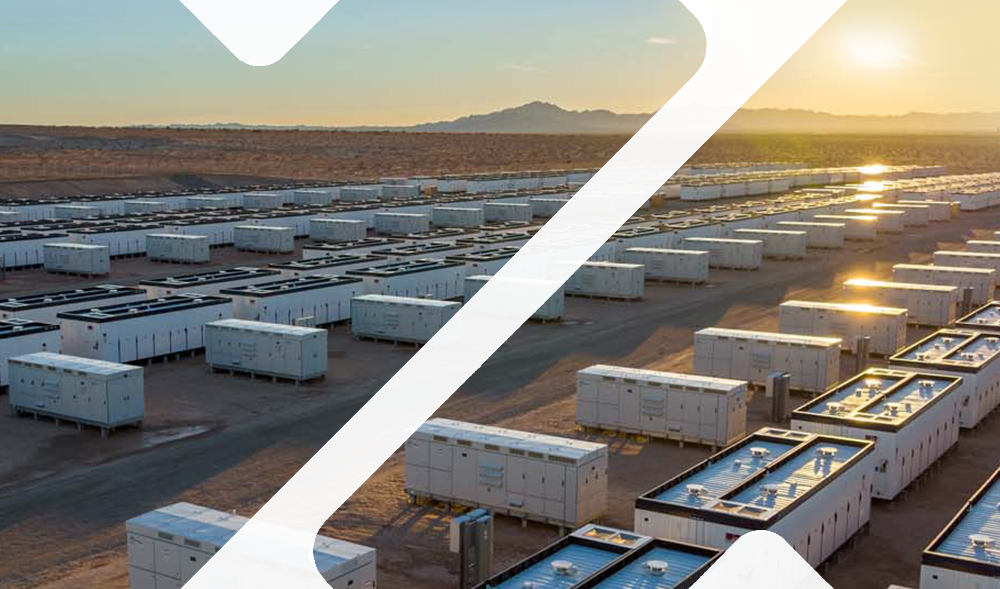
Battery energy storage systems are currently deployed and operational in all environments and settings across the United States, from the freezing temperatures of Alaska to the deserts of Arizona. These systems are designed with associated heating and cooling systems to ensure optimal battery operations and life based on the environmental conditions at the installation location. Not only are battery energy storage facilities built to withstand disruptive weather events, but they can also help increase resiliency to extreme weather events, prevent power outages, and provide back-up power.
Do batteries leak or emit pollution?
In normal operation, energy storage facilities do not release pollutants to the air or waterways. Like all energy technologies, some batteries can present chemistry-specific hazards under fault conditions. Batteries with free-flowing electrolytes could leak or spill chemicals, so these systems are normally equipped with spill containment. These batteries mostly have aqueous electrolytes and may emit small quantities of hydrogen gas in normal operation and larger amounts under fault conditions, but these emissions are handled by ventilation systems and are not considered polluting. As discussed previously, all batteries release toxic substances in a fire, and if water is used for firefighting, it can create contaminated runoff – another reason for manufacturers’ recommendations to allow fires to burn themselves out.
Do batteries give off electromagnetic radiation?
Like batteries used in handheld devices, lithium-ion and other types of batteries do not give off electromagnetic radiation. These batteries store electrical energy in chemical form, which can be converted back into electrical energy and discharged back to the grid. This conversion is performed by a bidirectional inverter, which must be tested and certified for electromagnetic compatibility.
Do batteries produce noise?
Batteries alone do not make any noise. Unlike other power infrastructure or generation facilities, energy storage systems have very low noise profiles, with fans, HVAC systems, and transformers producing sounds at similar levels to standard commercial buildings.
What do grid batteries look like? Is there light pollution?
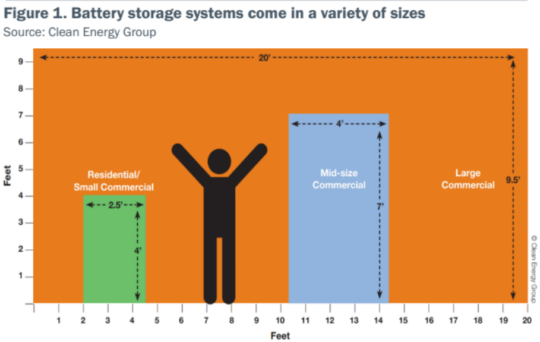
Battery energy storage systems may or may not be visible from a facility’s property line. Grid batteries can be housed in a variety of enclosures or buildings, none of which are taller than a house. Energy storage facilities are often unmanned and only require light as dictated by NFPA 70E. Some may have lighting for security purposes, and this would be consistent with normal streetlighting.
How long will grid batteries last?
Grid battery life depends on usage and can last for 20 years or more. One of the earliest deployed grid-scale battery energy storage systems, put into operation in Alaska by the Golden Valley Electric Association, has been in continuous operation since 2003. Batteries will degrade based on numerous factors such as chemical composition, number of charge and discharge cycles, and the temperature of the environment that the batteries are exposed to.
What happens to the batteries when they reach the end of their lifetime?
The U.S. lithium-ion battery recycling industry is growing rapidly to accommodate batteries from both electric vehicles and energy storage systems. Companies are moving beyond simple recovery of raw materials and into direct recycling of electrode materials that can be built sustainably and cost-effectively into new batteries. Indeed, energy storage applications provide the opportunity to repurpose batteries from end-of-life electric vehicles, extracting maximum usage from these units for the benefit of consumers.
How are batteries monitored?
Battery energy storage systems are equipped with an energy monitoring systems (EMS) with sensors that track battery temperatures and enable storage facilities to turn off batteries if they get too hot or too cold. Battery management systems (BMS) also monitor the performance of each individual cell voltage and other key parameters then aggregate that data in real time to assess the entire system’s operation, detect anomalies, and adjust the system to maintain safety. BMSs often contain state of the art software designed to safely operate and monitor each individual cell within an energy storage systems.
How are battery energy storage systems regulated?
Battery energy storage systems must comply with electrical and fire codes adopted at the state and local level. Facility owners must submit documentation on system certification, fire safety test results, hazard mitigation, and emergency response to the local Authority Having Jurisdiction (AHJ) for approval. Before operation, facility staff and emergency responders must be trained in safety procedures and are required to be given annual refresher training.
To learn more, refer to ACP’s ESS Codes and Standards Overview. The U.S. storage industry has continuously supported the development of codes, standards, and best practices to promote safety.
What are the certification requirements for energy storage systems?
The fire codes require battery energy storage systems to be certified to NFPA 855. NFPA 855 – Standard for the Installation of Stationary Energy Storage Systems, outlines minimum requirements for the safe design, installation, commissioning, operation, and decommissioning of energy storage systems to mitigate fire and explosion risks, protect first responders, and safeguard surrounding communities.
Battery systems are also regulated by UL 9540, Energy Storage Systems and Equipment. Each major component – battery, power conversion system, and energy storage management system – must be certified to its own UL standard, and UL 9540 validates the proper integration of the complete system. Additionally, non-residential battery systems exceeding 50 kWh must be tested in accordance with UL 9540A, Standard for Test Method for Evaluating Thermal Runaway Fire Propagation in Battery Energy Storage Systems. This test evaluates the amount of flammable gas produced by a battery cell in thermal runaway and the extent to which thermal runaway propagates within the battery system.
What are some key parameters for energy storage systems?
Rated power is the total possible instantaneous discharge capability, usually in kilowatts (kW) or megawatts (MW), of the system. Energy is the maximum amount of stored energy (rate of power over a given time), usually described in kilowatt-hours (kWh) or megawatt-hours MWh. Cycles are the number of times the battery goes from fully (or nearly fully) charged to discharged (or fully discharged). The amount of time or cycles a battery storage system can provide regular charging and discharging before failure or significant degradation is typically the cycle lifetime. State of Charge (SoC) is usually expressed as a percentage and represents the battery’s level of charge and ranges from completely discharged to fully charged. The state of charge influences a battery’s ability to provide energy or ancillary services to the grid at any given time. State of Health (SoH) is a calculation that will express the estimated remaining capacity including degradation. This can be simplified into the difference between a new battery and the actual battery based on the amount of capacity lost to degradation caused by time, temperature, number of cycles, and several other factors.
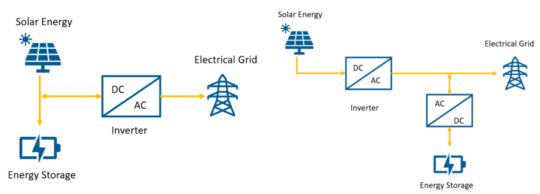
What is the difference between AC and DC coupled systems?
Energy storage systems are typically defined as either AC or DC coupled systems. This is simply the point of connection for the energy storage system in relation to the electrical grid or other equipment.
For AC (alternating current) coupled systems, the batteries are connected to the part of the grid that has AC or alternating current.
For energy storage systems that are also connected to solar energy, there is an option to have the energy storage system be DC (direct current) coupled. Since solar generation systems create DC electricity, it is often most efficient to have this go directly to the batteries (via a DC-DC converter) as DC energy. This can be utilized for residential, commercial, or utility applications.
How do energy storage systems strengthen grid reliability?
- Frequency Response and Regulation: Energy storage ensures the moment-to-moment stability of the electric system at all times.
- Peaking Capacity: Energy storage meets short-term spikes in electric system demand that can otherwise require use of lower-efficiency, higher-cost generation resources.
- Maximizing Renewable Energy Resource: Energy storage reduces curtailment of renewable generation resources and maximizes their contribution to system reliability.
- Grid Infrastructure Support: Energy storage relieves transmission and distribution infrastructure congestion, prevents reliability violations on power lines, enhances the resilience of wires infrastructure, and creates a more flexible power system.
- Increasing Operational Flexibility: Energy storage facilitates efficient integration of a diversity of generation resources and improves the ability of the electric grid to adapt rapidly to changes in demand and generation.
- Improving Grid Resilience: Energy storage serves as back-up power for individual homes, businesses, communities, and the broader grid system to minimize and prevent power outages and service interruptions from extreme weather.
Understanding the U.S. energy storage market
How large is the battery energy storage market?
Large-scale battery storage systems are increasingly being used across the power grid in the United States.
In 2010, battery storage accounted for less than 50 MW of power capacity – the maximum amount of power output a battery can provide in any instant – in the United States. By 2020, battery storage installations had grown by nearly 45 times for over 2 GW of power capacity. The sector’s exponential growth continued, and total operating capacity of battery storage in the U.S. sat at nearly 30 GW by the end of 2024.
Is there a U.S. domestic manufacturing supply chain for energy storage systems?
Yes, there is an increasingly expanding domestic supply chain for energy storage systems in the U.S. Several companies have begun manufacturing battery cells and modules within the U.S. with additional investment in localized production of integrated systems including battery enclosures, thermal management systems, fire safety, and power conversion systems. However, much of the upstream processing and midstream component production (e.g., cathode/anode active materials, electrolytes, and separators) is largely concentrated overseas. Continued support through incentives, trade policy, and demand side programs will be critical to strengthening a fully domestic supply chain.
Over the past three years, the U.S. battery storage landscape has rapidly evolved with focus on the manufacturing of downstream cells, modules, and enclosures. There are several module manufacturing facilities now online. Tesla, Hithium and Fluence contribute the largest capacities in the lithium, iron, phosphate (LFP) battery space. Manufacturing both cell and module in West Virginia, Form Energy, produces a novel iron-air battery technology boasting 100-hour storage capabilities. With modest, but growing domestic capacity, LFP cell manufacturing has seen a considerable uptick in the last year, exceeding 20 GWh per year. LG Energy’s Holland plant is the largest contributor of current cell manufacturing volume in the U.S. Moving into the mid-stream, manufacturing growth is progressing slower, but there are dozens of cathode, anode, and electrolyte manufacturing projects that have been announce or that are already under construction. Battery raw materials projects including natural graphite mining exploration, synthetic graphite processing, and lithium extraction and processing projects, have tremendous excitement and momentum despite being in earlier stages.
How are batteries arranged in an energy storage system?
Battery energy storage systems vary in size from residential units of a few kilowatt-hours to utility-scale systems of hundreds of megawatt-hours, but they all share a similar architecture. These systems begin with individual battery cells, which are electrically connected and then packaged in a battery module. Battery modules are aggregated with controls and other equipment and housed within racks, which in turn are built into an enclosure, such as a cabinet or ISO shipping container, or a building. One or more of these enclosures or buildings, along with necessary electrical equipment, comprise the battery energy storage facility that discharges to or charges from the electrical grid.