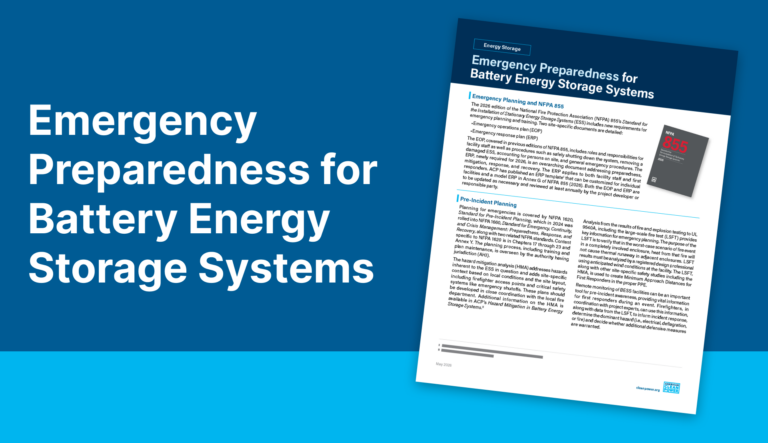
Robust emergency preparedness is critical to the safe deployment and operation of battery energy storage systems (BESS). Industry standards require comprehensive pre‑incident planning, coordinated training, and clear recovery procedures to protect first responders, facility personnel, and surrounding communities. These practices ensure risks are identified in advance, incidents are managed effectively, and systems can be safely returned to service when appropriate.
Key elements of BESS emergency preparedness include:
- Pre‑incident planning aligned with NFPA standards, including hazard mitigation analyses, site‑specific emergency access, and coordination with local fire departments.
- Fire and explosion risk analysis informed by UL 9540A testing to establish minimum approach distances and guide responder tactics under worst‑case conditions.
- Emergency planning requirements under NFPA 855, including both an Emergency Operations Plan (EOP) and a comprehensive Emergency Response Plan (ERP) covering preparedness, response, and recovery.
- Ongoing training for facility staff and first responders, with annual refreshers, clear escalation paths, and tabletop exercises to test readiness.
- Post‑incident recovery procedures that address safe equipment removal, waste handling, inspection of unaffected systems, and steps to return facilities to service in accordance with environmental and safety regulations.
Resource added May 5, 2026