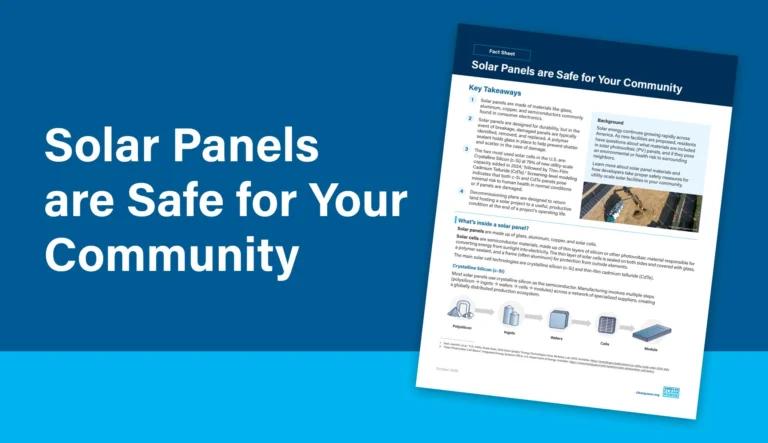
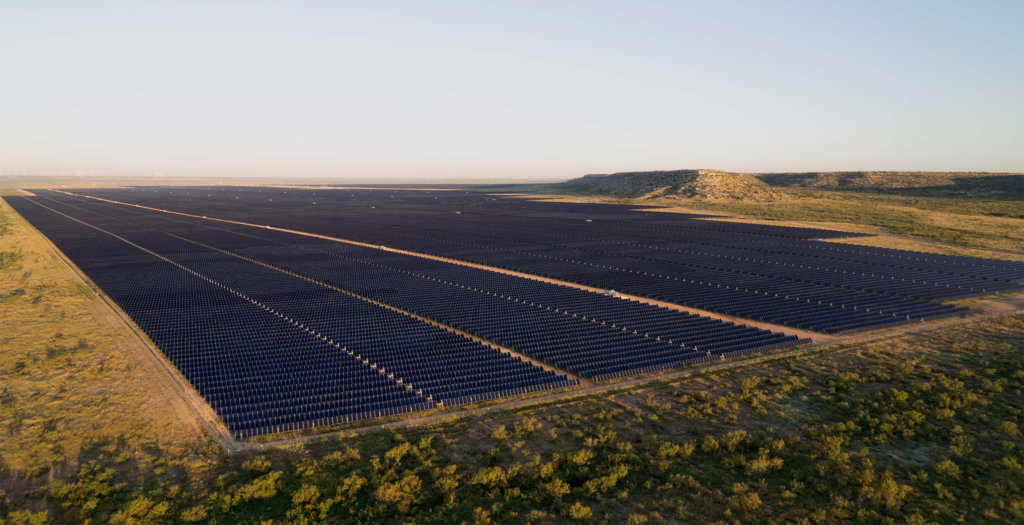
Learn about the materials in solar panels and discover how utility-scale solar facilities are safe for your community.
Key Takeaways
- Solar panels are made of materials like glass, aluminum, copper, and semiconductors commonly found in consumer electronics.
- Solar panels are designed for durability, but in the event of breakage, damaged panels are typically identified, removed, and replaced. A polymer sealant holds glass in place to help prevent shatter and scatter in the case of damage.
- The two most used solar cells in the U.S. are: Crystalline Silicon (c-Si) at 79% of new utility-scale capacity added in 2024,1 followed by Thin-Film Cadmium Telluride (CdTe).2 Screening-level modeling indicates that both c-Si and CdTe panels pose minimal risk to human health in normal conditions or if panels are damaged.
- Decommissioning plans are designed to return land hosting a solar project to a useful, productive condition at the end of a project’s operating life.